MIT Mysore

Computer Science & Engineering (Artificial Intelligence & Machine Learning)

Document

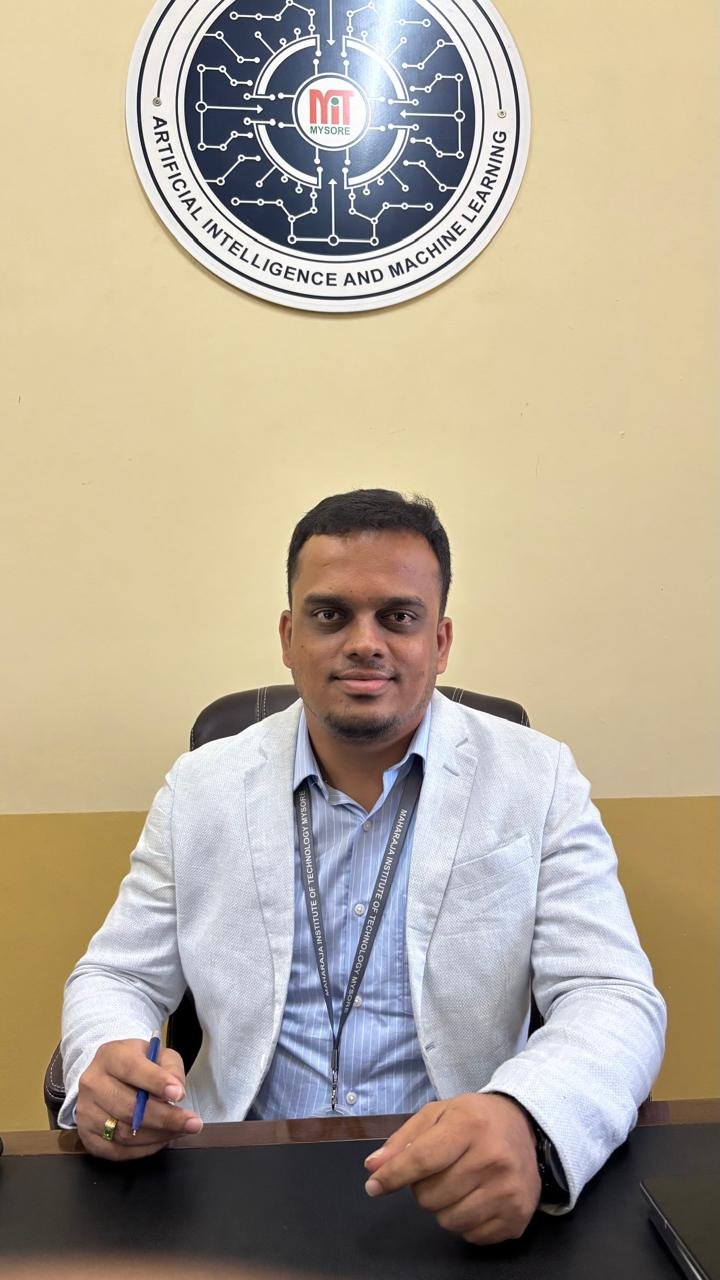
Dr. Ranjith K C

HOD

Department of Computer Science & Engineering (Artificial Intelligence & Machine Learning)

Vission and Mision

Vision

To achieve excellent standards of quality education in the field of Artificial intelligence and Machine Learning.

Mission

To nurture the students with strong fundamentals for a successful carrier in​ the field of artificial intelligence and machine learning. To motivate the students for post-graduation and research. To create impact in the society with continuous research and innovations.

Department Activities

Department Intake

Academic YearSanctioned IntakeAdmitted Students
RegularLateralRegularLateral
2023-202460+36636
2024-202560+36636

ABOUT THE DEPARTMENT

As the Head of the Department of Computer Science and Engineering (Artificial Intelligence & Machine Learning) at Maharaja Institute of Technology Mysore, it is my privilege to welcome you to our newly established department. Founded in 2023 with an intake of 60 students, we are committed to establishing ourselves as a leader in AI education, bridging the gap between traditional computer science and the rapidly evolving field of artificial intelligence. Our curriculum is thoughtfully designed to provide a strong foundation in both computer science and AIML, with an emphasis on practical applications alongside theoretical knowledge in areas such as machine learning, natural language processing, computer vision, and robotics. As a young and dynamic department, we are uniquely positioned to adapt swiftly to the latest advancements in AI. Our mission is to develop not just skilled engineers, but visionary problem-solvers capable of addressing complex challenges through AI-driven solutions. Despite being newly established, we are actively building partnerships with industry leaders and research institutions to provide our students with cutting-edge learning experiences and opportunities. We invite you to join us on this exciting journey as we explore the vast possibilities of artificial intelligence and shape the next generation of AI innovators and leaders.

  • PEO1 Acquire fundamentals and expertise in data engineering skills for professional career in industry, government, academia as innovative engineers.
  • PEO2 Pursue higher studies with research potential.
  • PEO3 Demonstrate professional ethics and attitude as an individual or team member at workplace and function professionally in a global competent world.

PO1: Engineering Knowledge: Apply knowledge of mathematics, natural science, computing, engineering fundamentals and an engineering specialization as specified in WK1 to WK4 respectively to develop to the solution of complex engineering problems.

PO2: Problem Analysis: Identify, formulate, review research literature and analyze complex engineering problems reaching substantiated conclusions with consideration for sustainable development. (WK1 to WK4)

PO3: Design/Development of Solutions: Design creative solutions for complex engineering problems and design/develop systems/components/processes to meet identified needs with consideration for the public health and safety, whole-life cost, net zero carbon, culture, society and environment as required. (WK5)

PO4: Conduct Investigations of Complex Problems: Conduct investigations of complex engineering problems using research-based knowledge including design of experiments, modelling, analysis & interpretation of data to provide valid conclusions. (WK8).

PO5: Engineering Tool Usage: Create, select and apply appropriate techniques, resources and modern engineering & IT tools, including prediction and modelling recognizing their limitations to solve complex engineering problems. (WK2 and WK6)

PO6: The Engineer and The World: Analyze and evaluate societal and environmental aspects while solving complex engineering problems for its impact on sustainability with reference to economy, health, safety, legal framework, culture and environment. (WK1, WK5, and WK7).

PO7: Ethics: Apply ethical principles and commit to professional ethics, human values, diversity and inclusion; adhere to national & international laws. (WK9)

PO8: Individual and Collaborative Team work: Function effectively as an individual, and as a member or leader in diverse/multi-disciplinary teams.

PO9: Communication: Communicate effectively and inclusively within the engineering community and society at large, such as being able to comprehend and write effective reports and design documentation, make effective presentations considering cultural, language, and learning differences

PO10: Project Management and Finance: Apply knowledge and understanding of engineering management principles and economic decision-making and apply these to one’s own work, as a member and leader in a team, and to manage projects and in multidisciplinary environments.

PO11: Life-Long Learning: Recognize the need for, and have the preparation and ability for 

    1. Independent and life-long learning 
    2. Adaptability to new and emerging technologies and 
    3. Critical thinking in the broadest context of technological change. (WK8)
Dr. Ranjith K C

Dr. Ranjith K C

Head and Professor

BE M.Tech PhD

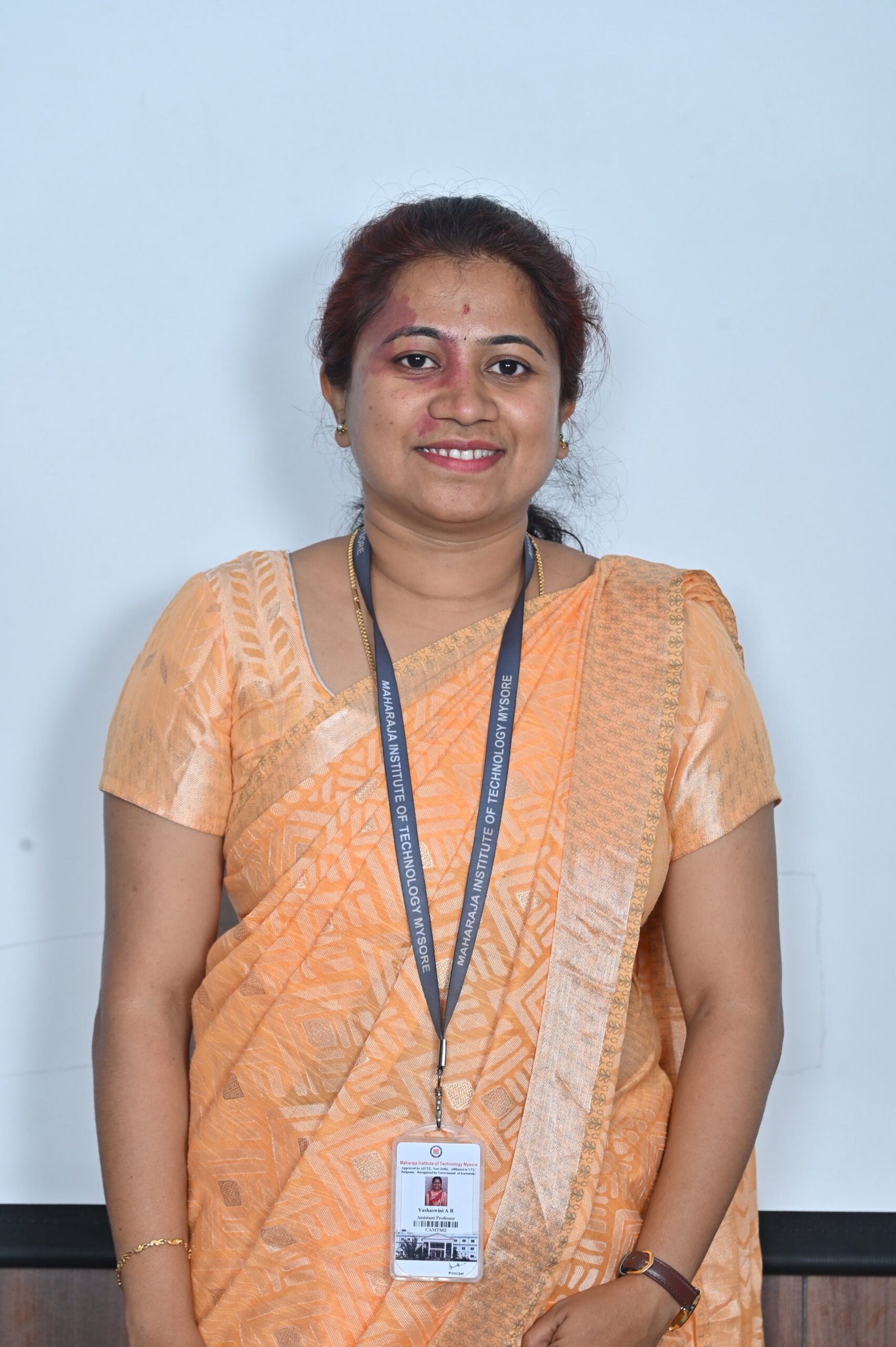
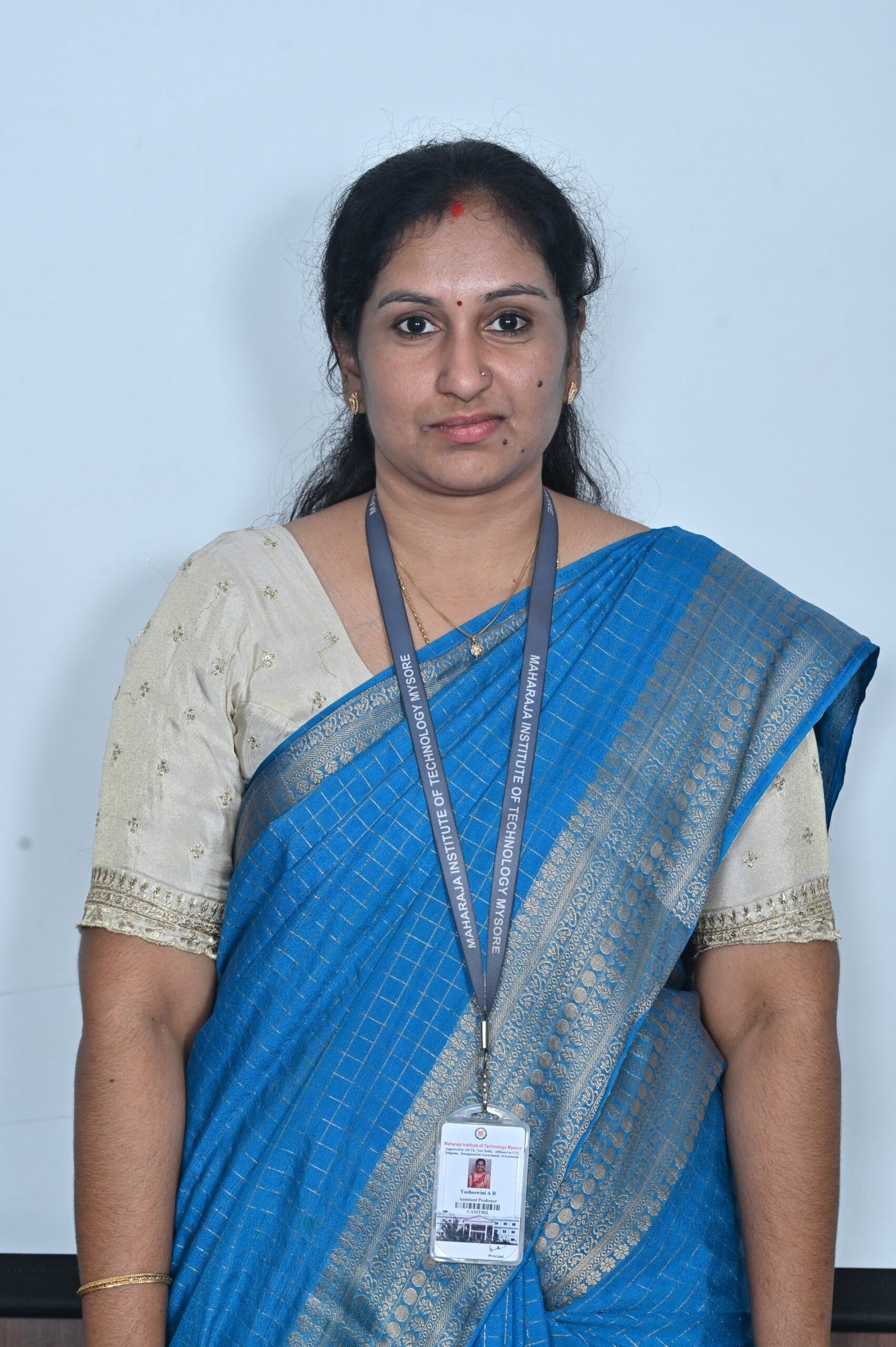
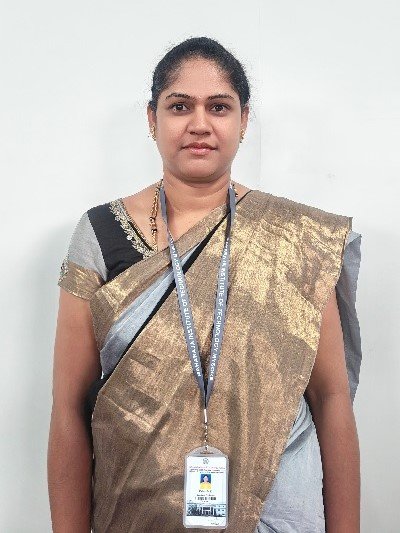
Mrs. Yashaswini A R

Mrs. Yashaswini A R

Assistant Professor

BE M.Tech

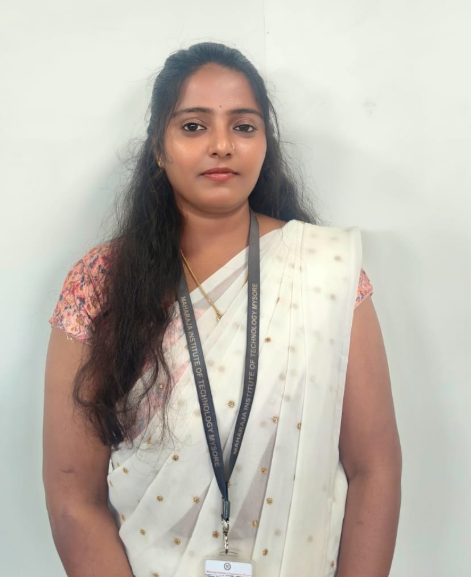
Mrs. Priyanka N

Mrs. Priyanka N

Assistant Professor

BE M.Tech

Mrs. Usha

Mrs. Usha

Assistant Professor

BE M.Tech

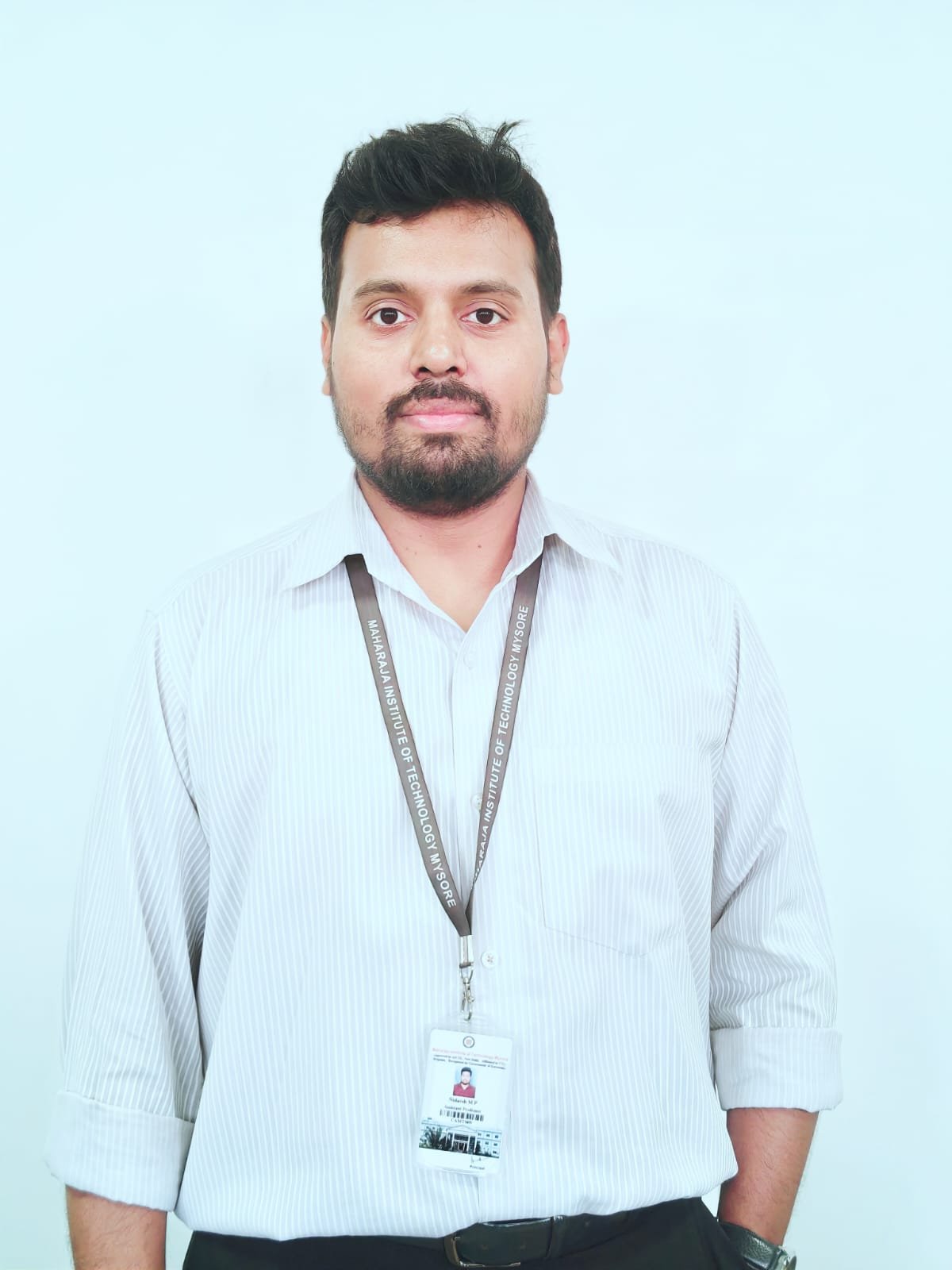
Mr. Nidarsh M P

Mr. Nidarsh M P

Assistant Professor

BE M.Tech

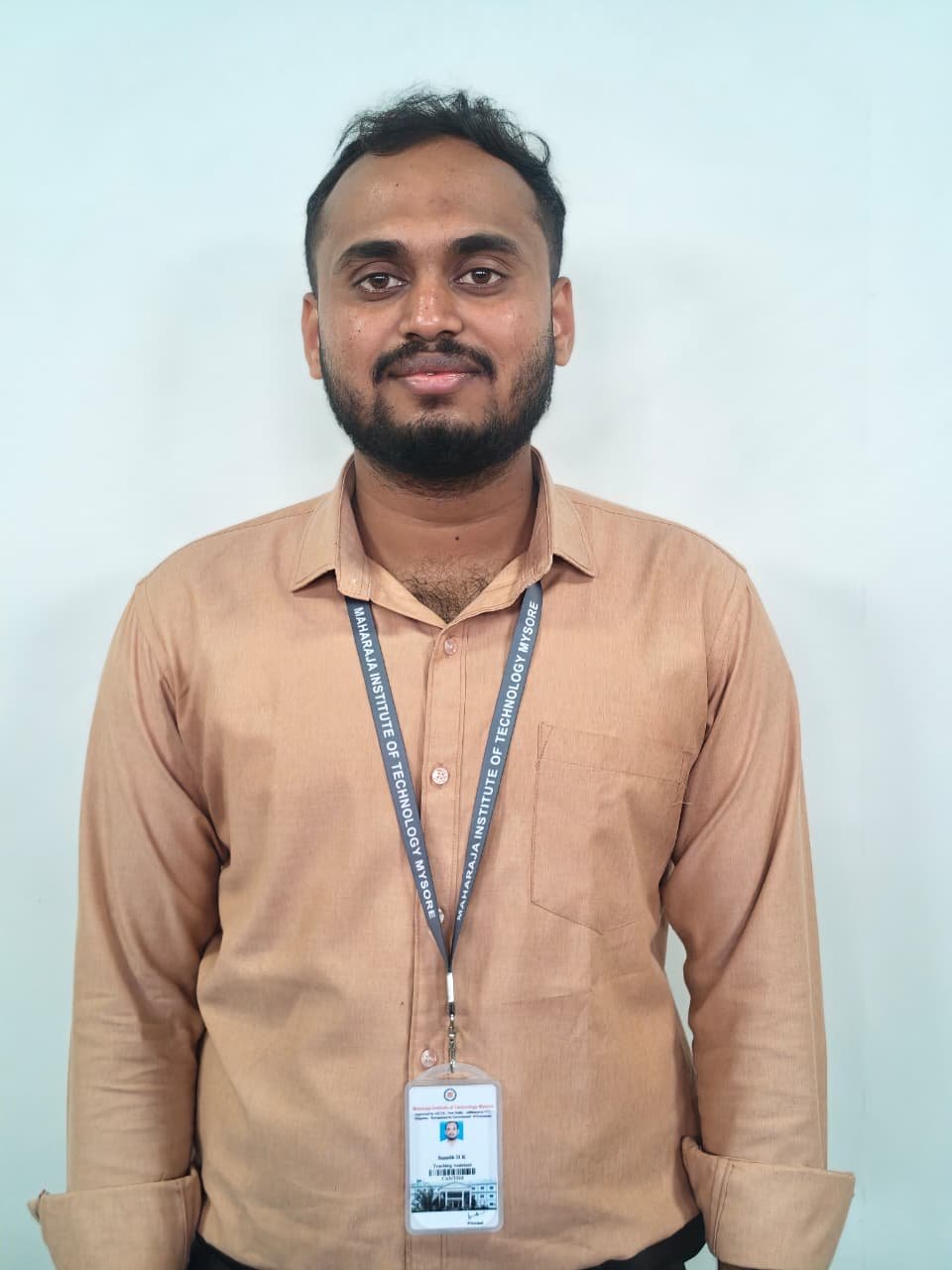
Mr. Sumith H K

Mr. Sumith H K

Teaching Assistant

BE

Mrs. Rakshitha B

Mrs. Rakshitha B

Teaching Assistant

BE

Mr. Anand V

Mr. Anand V

Lab Instructor

Diploma in cs
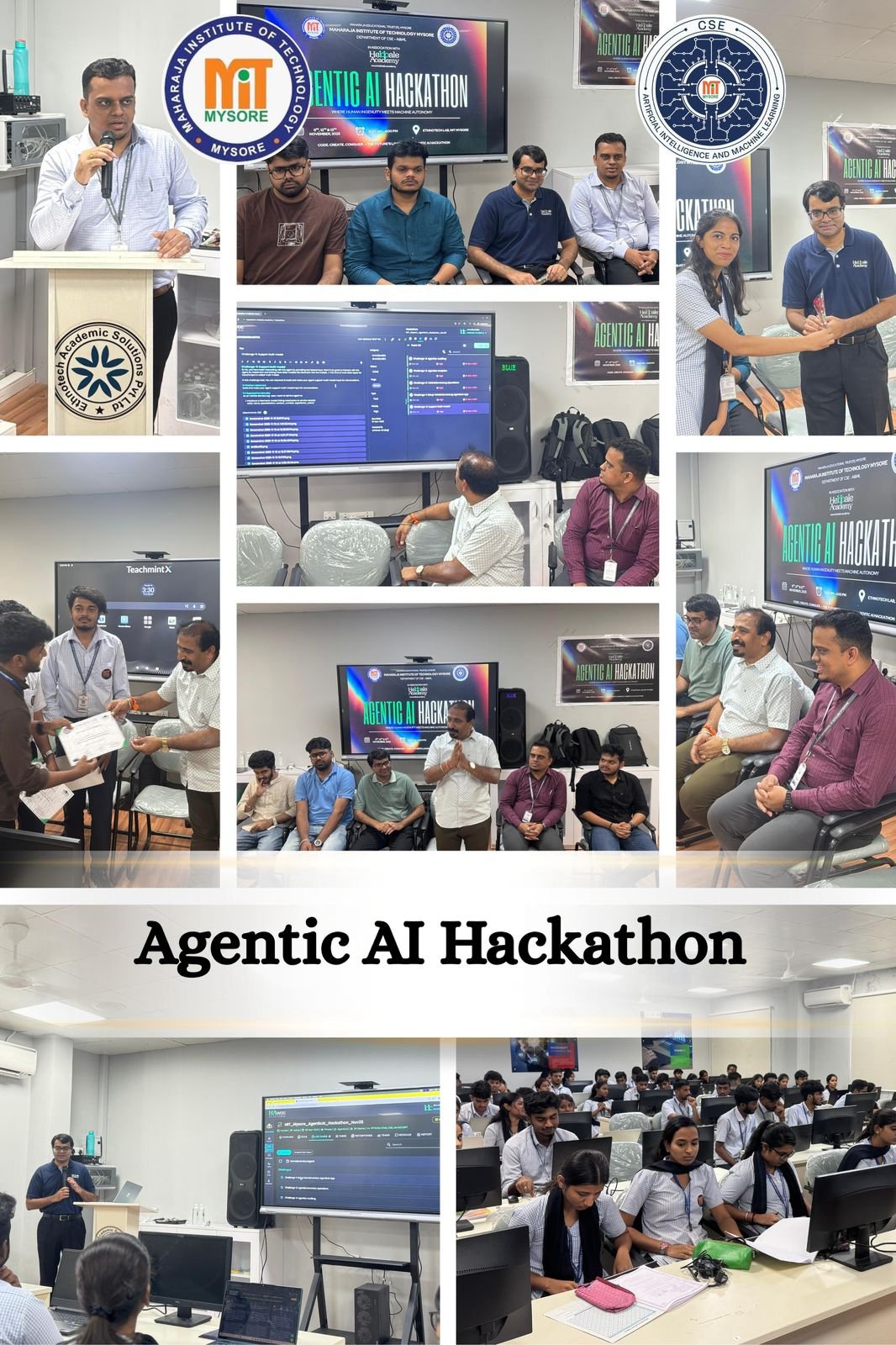
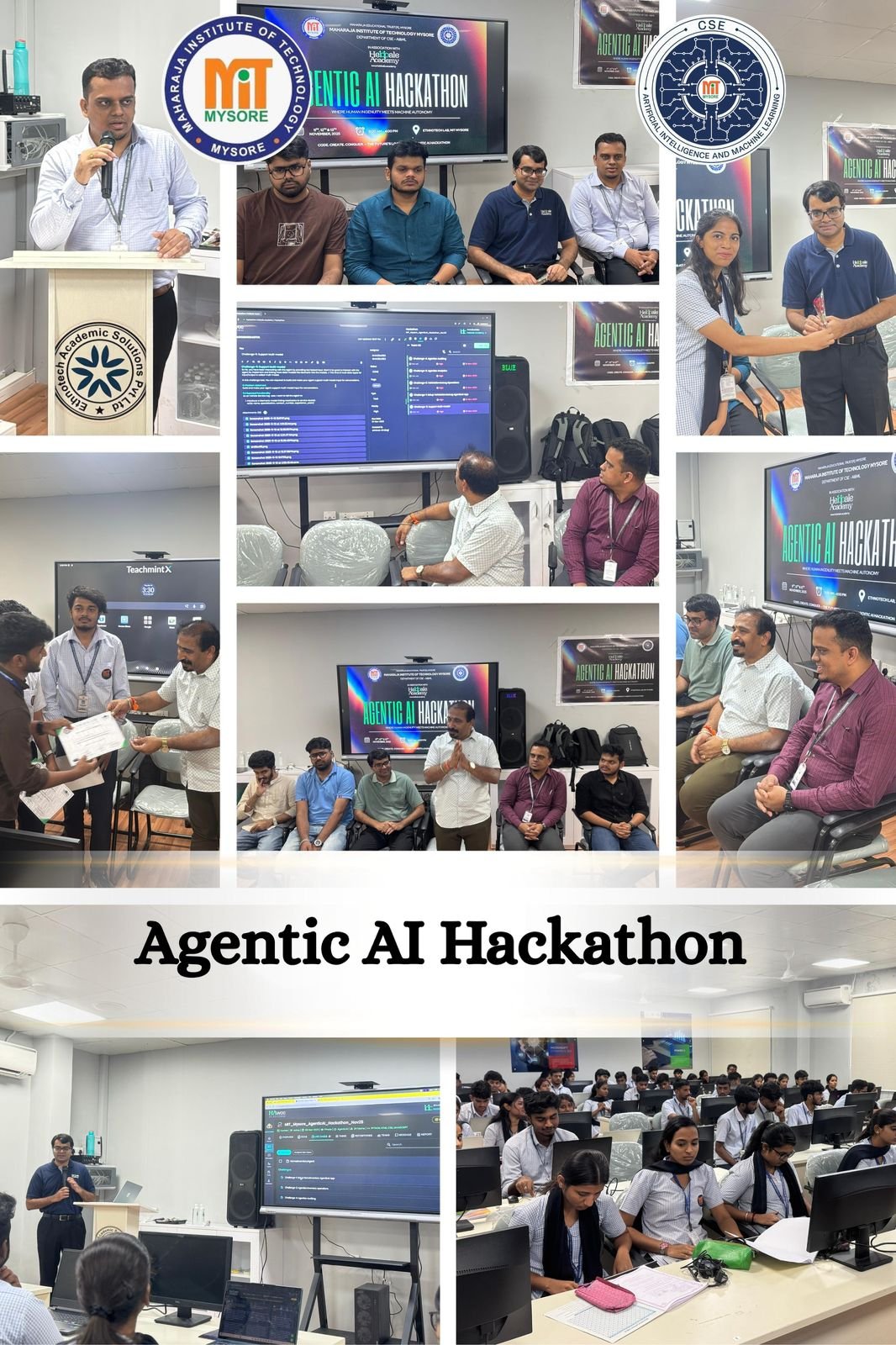
Hebbale Academy

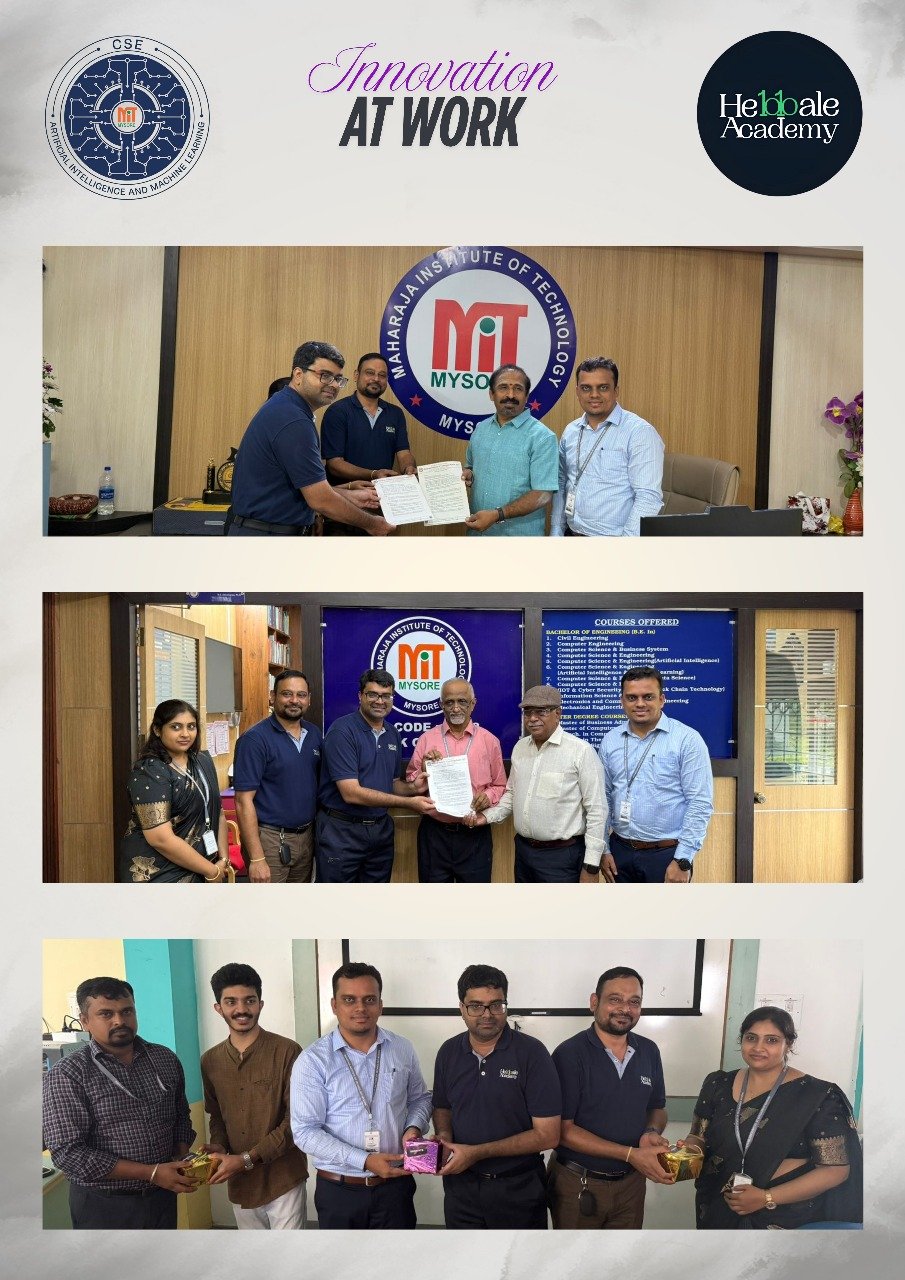
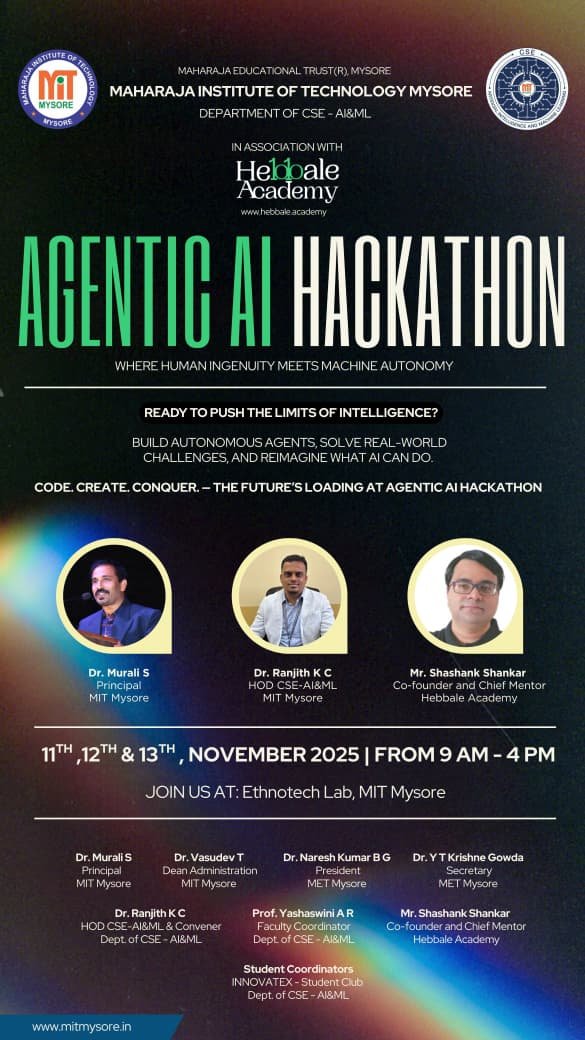
Maharaja Institute of Technology (MIT) Mysore, a premier engineering institution established in 2007, has entered into a strategic Memorandum of Understanding (MoU) with Hebbale Academy, an innovative Bengaluru based EdTech SaaS platform.” Add this sentences under MOU with Hebbale Academy

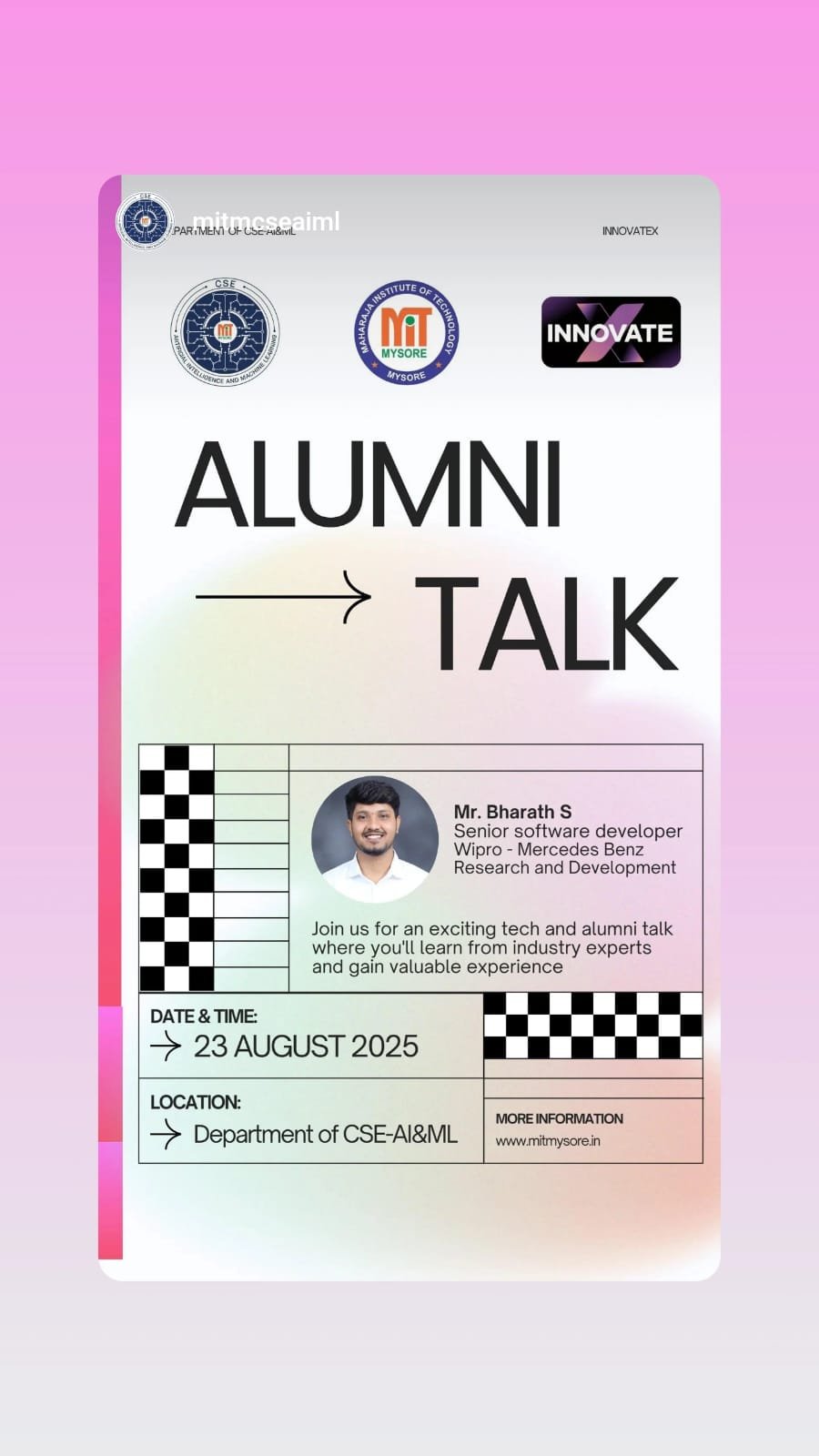
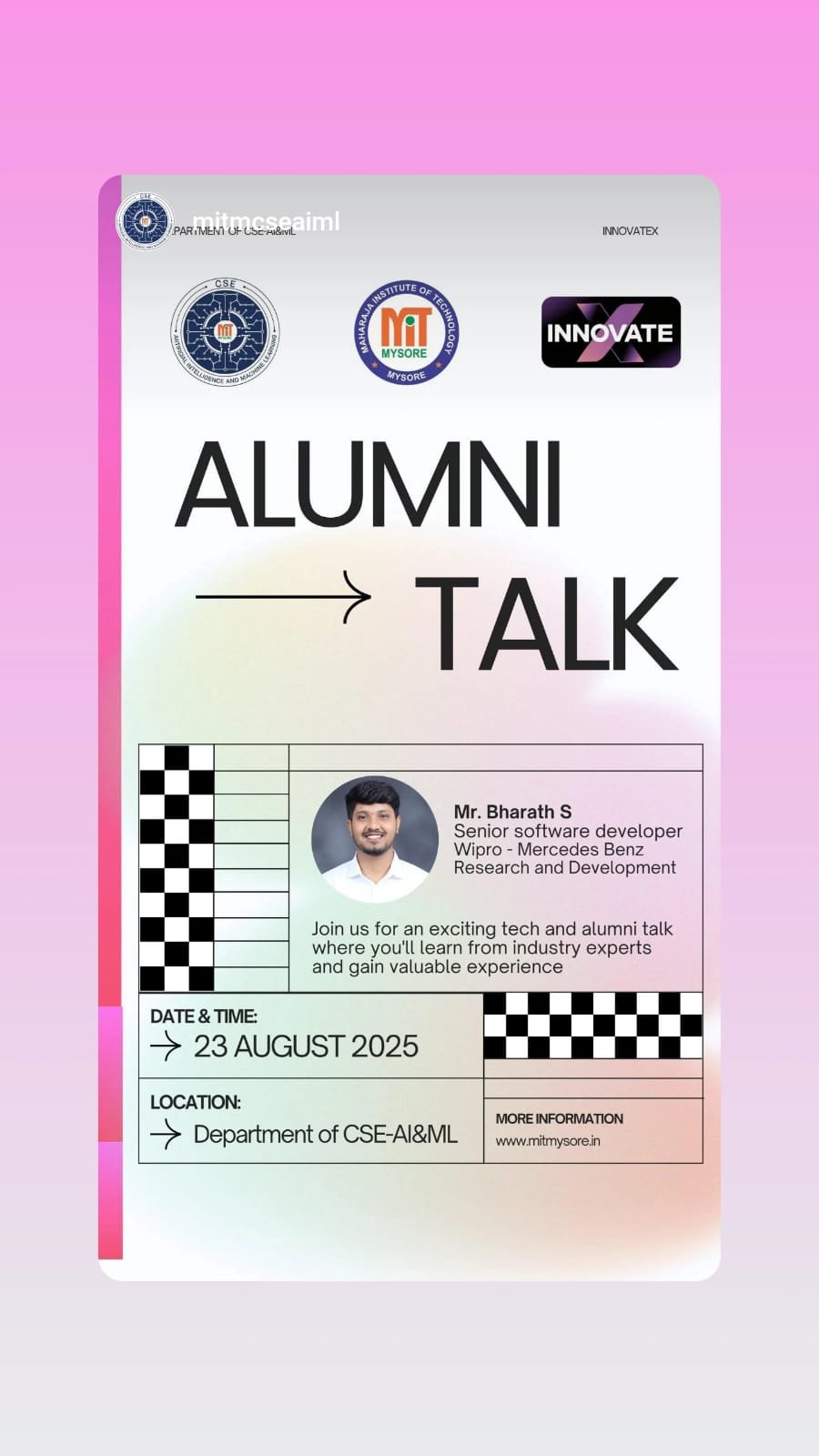
Alumini

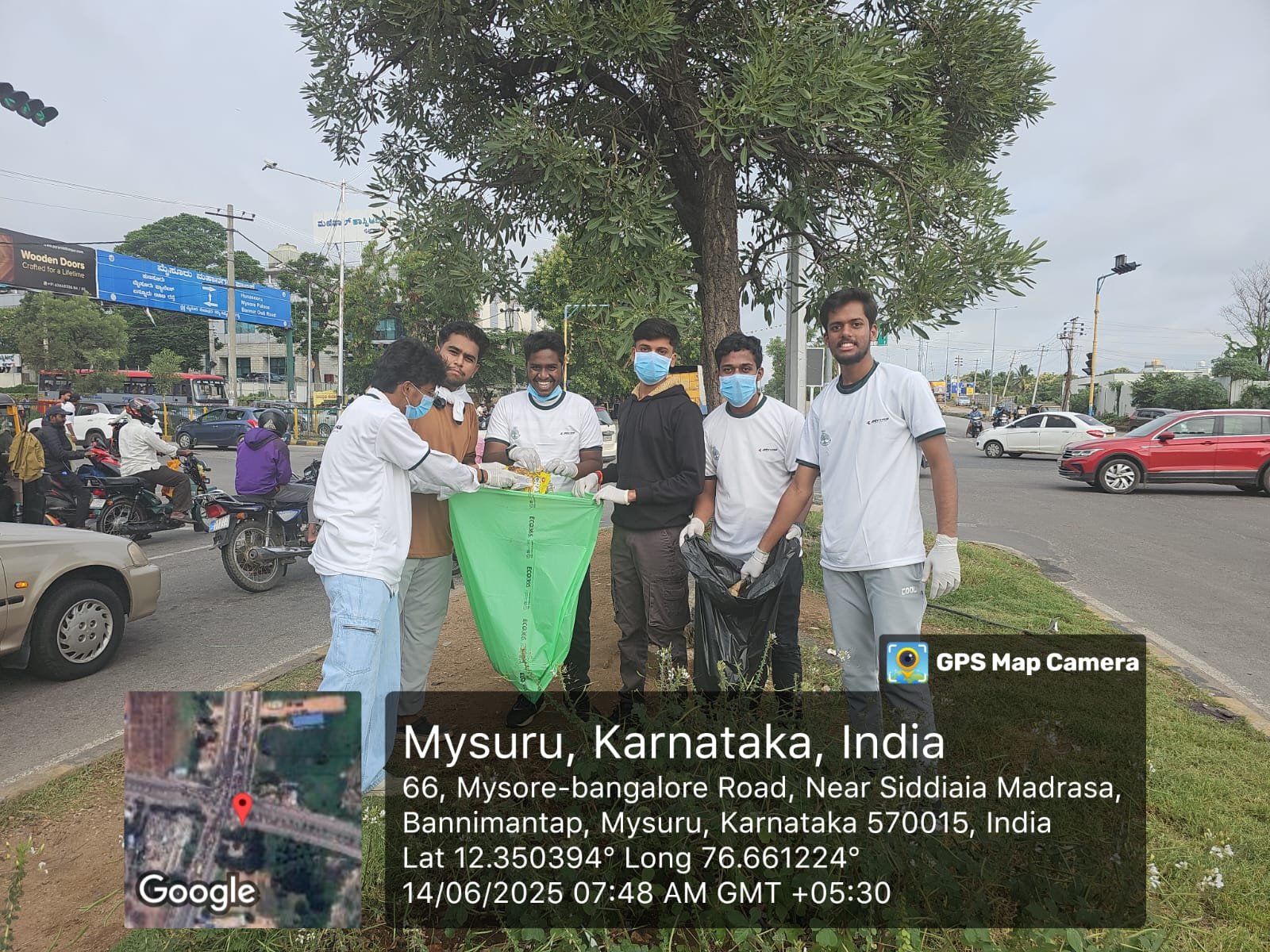
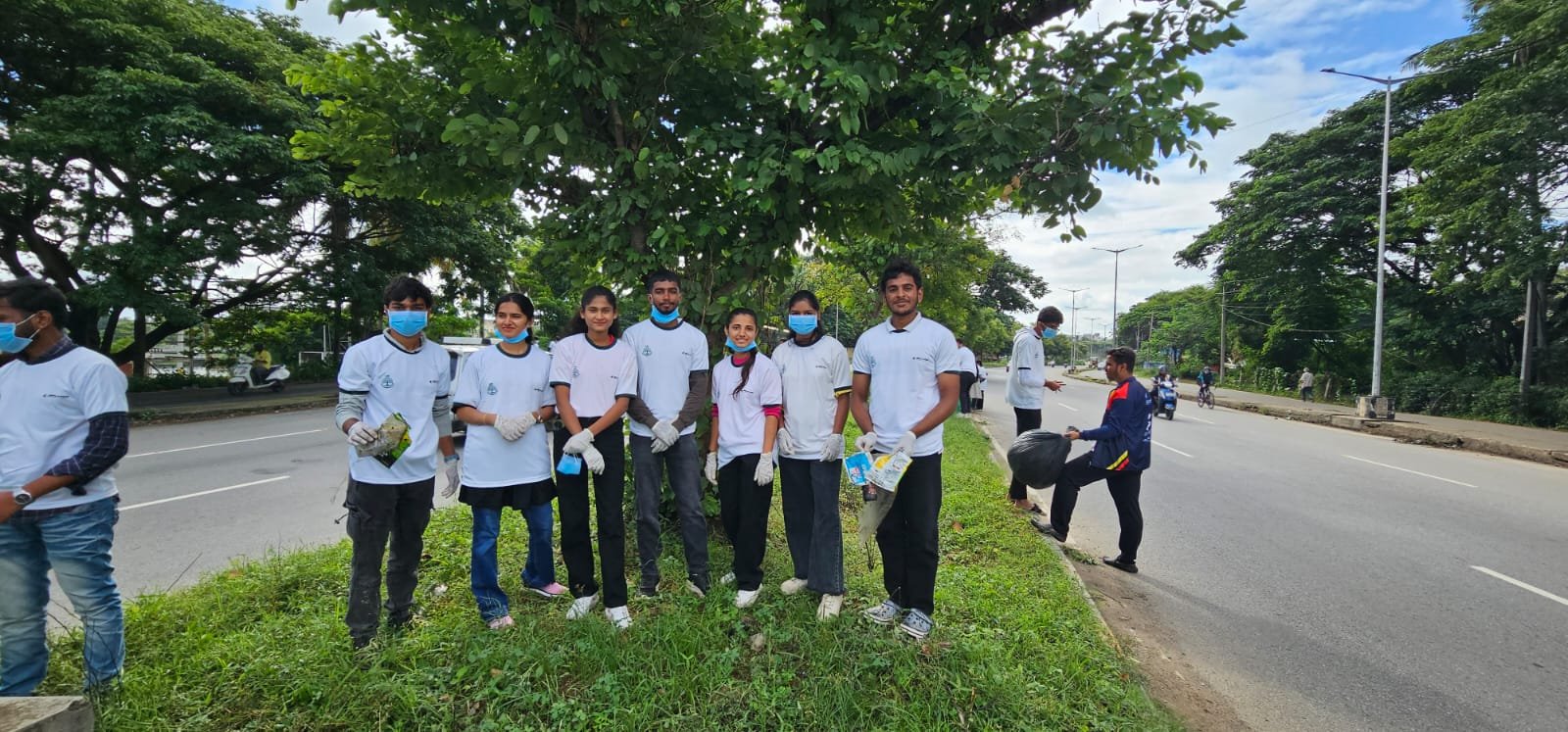
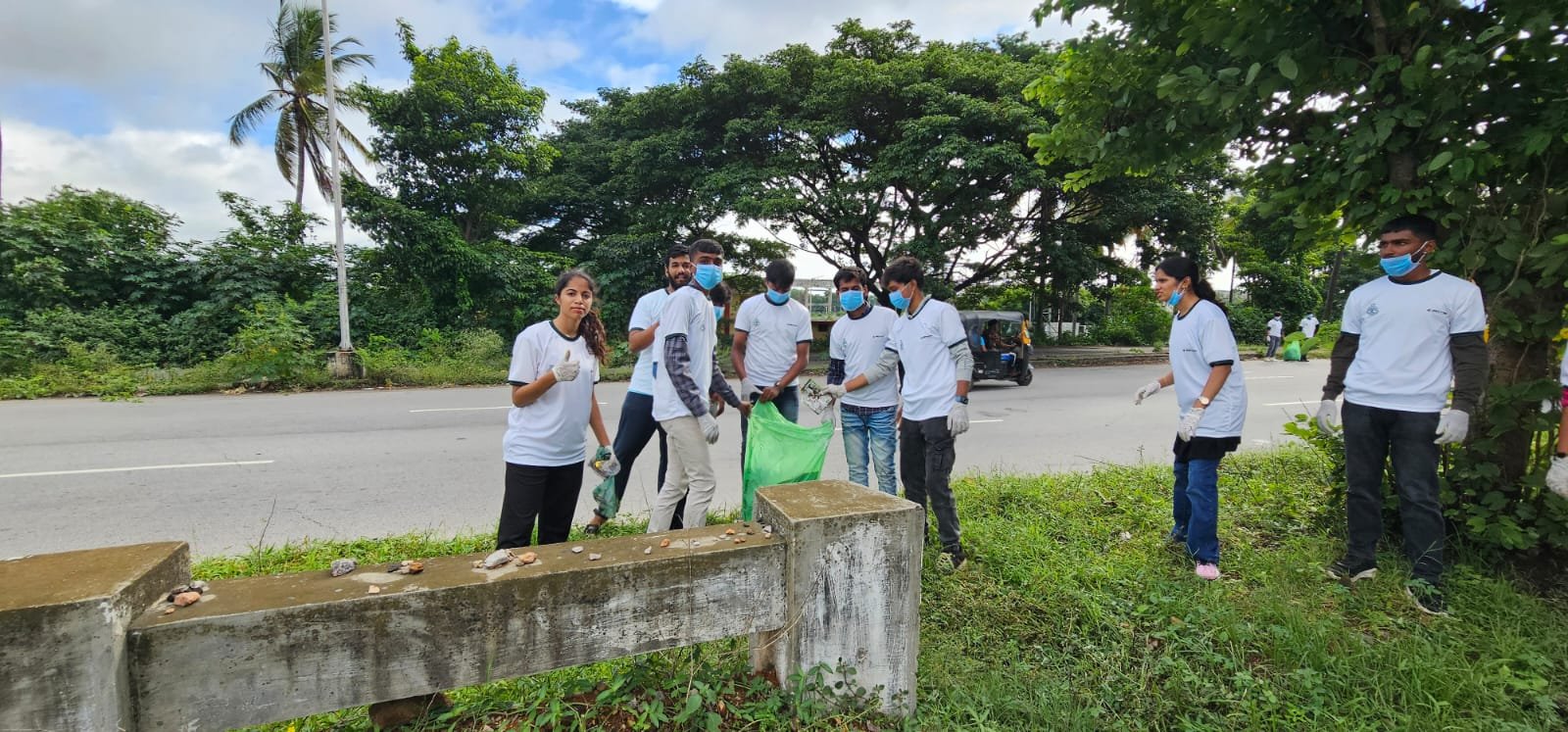
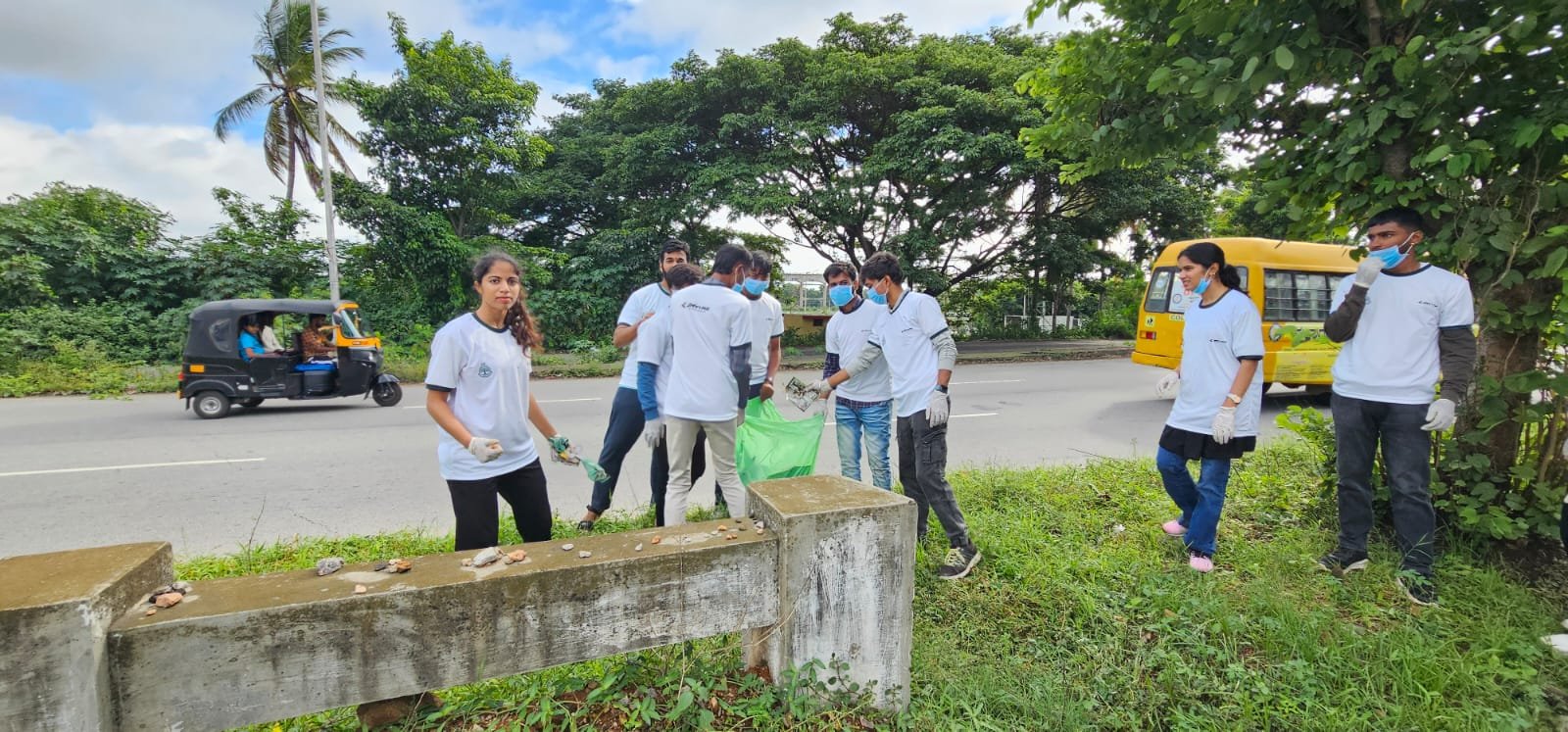
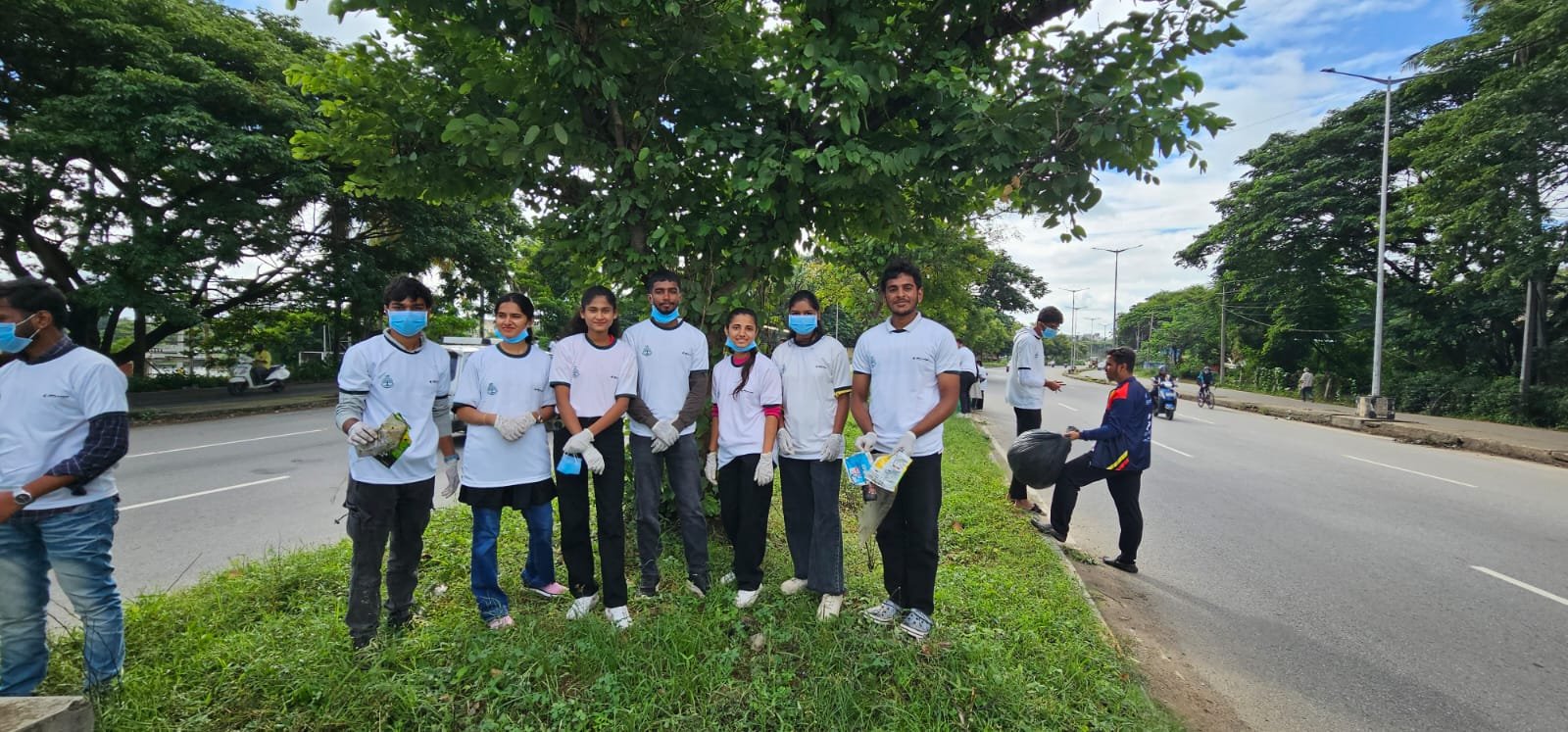
Namma Mysore Swatcha Mysore

14 June 2025

Scroll to Top